Can You Safely Remove Moss and Algae From Asphalt Shingles Without Pressure Washing?
Yes. Moss and algae can be safely removed from asphalt shingles without pressure washing by using a manufacturer-appropriate cleaning solution applied at low pressure. The Asphalt Roofing Manufacturers Association (ARMA) specifically warns against pressure washing asphalt shingles because high pressure can remove protective granules and contribute to premature roof failure.
For homeowners on the South Shore and Cape Cod, roof moss and algae are familiar problems. Moisture, shade, tree coverage, and coastal conditions can create an environment where organic growth thrives. All State Mobile Wash is a family-owned exterior cleaning company based in Hanover, Massachusetts, serving homeowners throughout the South Shore and Cape Cod. Our team uses low-pressure roof cleaning methods designed to address organic growth while protecting delicate asphalt shingles. Instead of treating every exterior surface with high pressure, we match the cleaning method to the material. That means tough surfaces such as concrete may call for pressure washing, while asphalt shingle roofs require a much gentler approach.
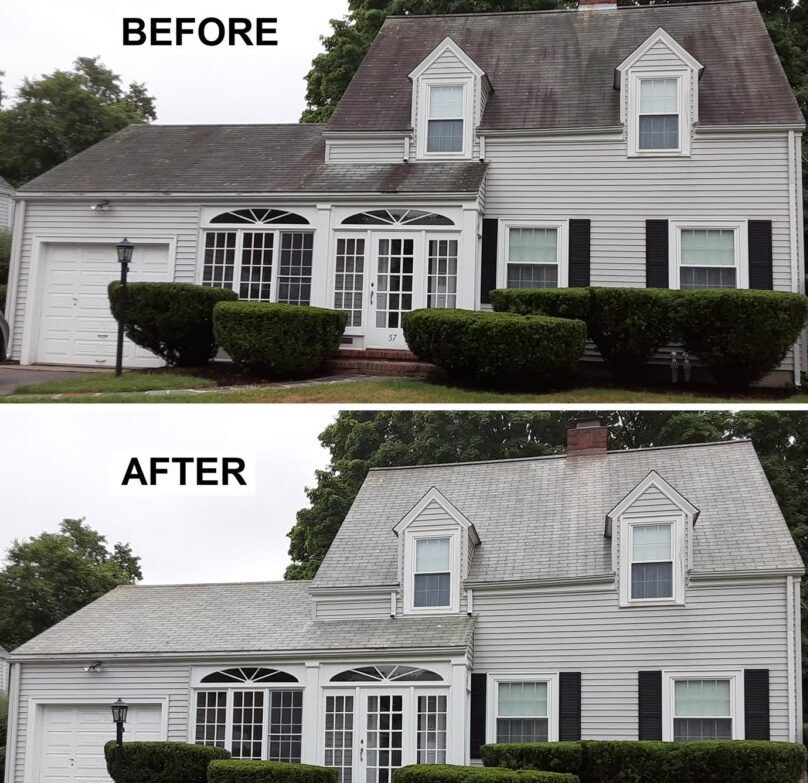
Why Soft Wash Roof Cleaning Is Safer for Asphalt Shingles
The safest approach to cleaning an asphalt shingle roof focuses on treating the organic growth rather than trying to blast it away. ARMA recommends gently applying an appropriate cleaning solution and rinsing with low-pressure water, while also advising homeowners to follow their specific shingle manufacturer’s cleaning instructions.
This distinction matters because an asphalt roof is not the same as a concrete driveway. Asphalt shingles contain protective granules that should remain intact. A roof can look cleaner after aggressive washing while having suffered unnecessary wear in the process.
Why Shouldn’t You Pressure Wash Asphalt Shingles?
High-pressure washing can loosen and remove the protective granules on asphalt shingles. ARMA says pressure washers should never be used to clean asphalt shingle roofs because they can cause granule loss and potentially lead to premature failure of the roofing system.
GAF also cautions that pressure washing can cause shingles to lose granules or lift. Water sprayed incorrectly can potentially work underneath shingles as well.
For homeowners, that means the fastest-looking cleaning method is not necessarily the safest one. A professional roof cleaning service should prioritize the condition of the roofing material, not simply immediate visual results.
How Does Soft Wash Roof Cleaning Remove Moss and Algae?
Soft wash roof cleaning uses cleaning chemistry and low-pressure application to treat biological growth without relying on aggressive water pressure.
ARMA’s guidance for asphalt roofing calls for an appropriate chlorine bleach and water solution applied with a sprayer, followed by a thorough low-pressure rinse. ARMA notes that exact directions can vary, so the shingle manufacturer’s instructions should always be considered.
The general process involves:
- Evaluating the roof: The roof’s condition, material, staining, moss growth, surrounding landscaping, and drainage areas should be considered before cleaning.
- Protecting the property: Plants and surrounding surfaces need appropriate protection from roof-cleaning solutions.
- Applying the treatment at low pressure: The cleaning solution targets algae and moss without using destructive pressure.
- Allowing adequate dwell time: The treatment needs time to work on the organic growth.
- Using a gentle rinse when appropriate: Manufacturer guidance should determine how the roof is rinsed and treated.
This is why professional roof washing is different from simply pointing a pressure washer at black streaks or green patches.
Are Moss and Black Roof Streaks the Same Problem?
No. Black roof streaks are commonly associated with blue-green algae, while moss is a plant that can retain moisture and physically affect shingles.
According to ARMA, the organism commonly responsible for dark roof discoloration is Gloeocapsa magma. Algae is especially common where moisture remains on roof surfaces, and ARMA notes that coastal and humid climates provide particularly favorable conditions. Algae staining itself is primarily an aesthetic issue on typical asphalt shingles.
Moss is more concerning. It tends to thrive on damp, shaded roof areas, particularly north-facing sections and areas beneath overhanging trees. As moss develops, it can cause shingle edges to lift or curl, potentially increasing the risk of wind damage and moisture problems.
That is one reason homeowners should avoid scraping, aggressively brushing, or blasting moss from shingles. Killing and loosening the growth safely can take time.
Why Are South Shore and Cape Cod Roofs Vulnerable to Organic Growth?
Moisture and shade are two major factors behind roof algae and moss, making roof maintenance particularly relevant for coastal Massachusetts properties.
ARMA reports that algae discoloration is widespread along the Eastern Seaboard and is especially associated with warm, humid conditions. Moss also favors roof sections that stay damp because of limited sunlight or overhanging vegetation.
Those conditions can be familiar around South Shore and Cape Cod communities. All State Mobile Wash serves coastal and inland communities including Plymouth, Duxbury, Marshfield, Scituate, Hingham, Barnstable, Falmouth, Sandwich, Hanover, Pembroke, and surrounding areas.
Homeowners can also make their roofs less inviting to organic growth by:
- Trimming branches that heavily shade the roof
- Removing leaves and other accumulated debris using non-abrasive methods
- Keeping gutters clear so water drains properly
- Watching north-facing and shaded roof sections for early growth
- Having questionable staining or moss evaluated before it becomes extensive
ARMA recommends tree trimming, debris removal, and proper gutter drainage as preventive measures for moss and algae problems.
Should You Clean Roof Moss Yourself or Hire a Professional?
Professional roof cleaning is generally the safer option because both the roof surface and the cleaning process present risks.
ARMA warns that roof cleaning solutions can make shingles extremely slippery and encourages the use of trained professionals for work on roofs. Professionals also need to consider landscaping protection, solution application, roof condition, runoff, and manufacturer instructions.
All State Mobile Wash specializes in low-pressure roof cleaning for South Shore and Cape Cod homes. The company does not use high-pressure power washing on asphalt shingle roofs, instead using a soft wash process designed for delicate roofing surfaces.
Frequently Asked Questions About Moss and Algae Roof Cleaning
Will soft washing damage asphalt shingles?
When the cleaning process follows appropriate manufacturer recommendations and uses low pressure, it avoids the high-pressure action that can strip protective granules from asphalt shingles. Always check the roofing manufacturer’s cleaning requirements for the specific shingle product.
Does moss disappear immediately after roof cleaning?
Not necessarily. ARMA explains that treated moss loosens over time, and severe moss growth may require more than one treatment. Trying to force immediate removal through aggressive pressure or scrubbing can damage shingles.
Are black streaks on a roof always dirt?
No. Black or dark-brown streaks on asphalt shingles are commonly caused by blue-green algae rather than ordinary dirt. ARMA identifies Gloeocapsa magma as a common cause of roof discoloration.
Can moss damage asphalt shingles?
Yes. Unlike typical algae discoloration, moss can interfere with asphalt shingle performance. ARMA states that moss can lift or curl shingle edges and, in severe cases, contribute to moisture problems.
Ready for Safe Roof Cleaning on the South Shore or Cape Cod?
Do not let moss and algae convince you that high-pressure roof washing is necessary. All State Mobile Wash provides professional soft wash roof cleaning designed to remove unwanted organic growth while protecting asphalt shingles from unnecessary pressure.
Ready to restore your roof safely? Contact All State Mobile Wash today to request an estimate.