What Do Black Streaks on a Roof Mean, and Should They Be Cleaned Before Winter?
Black streaks on an asphalt shingle roof are usually caused by algae, often Gloeocapsa magma, rather than ordinary dirt. For South Shore and Cape Cod homeowners, fall is a practical time to have the roof evaluated and, when appropriate, professionally cleaned before winter weather arrives. The safest approach is low-pressure roof cleaning, not pressure washing.
At All State Mobile Wash, roof cleaning is about more than improving curb appeal. As a family-owned exterior cleaning company based in Hanover, Massachusetts, the team serves homeowners throughout the South Shore and Cape Cod with professional soft washing and exterior cleaning services. All State Mobile Wash uses no-pressure or low-pressure roof cleaning methods designed to remove black streaks and organic buildup without subjecting shingles to damaging high pressure. The company emphasizes safe cleaning, reliable service, and careful treatment of each property.
Why Black Roof Streaks Are Common on South Shore and Cape Cod Homes
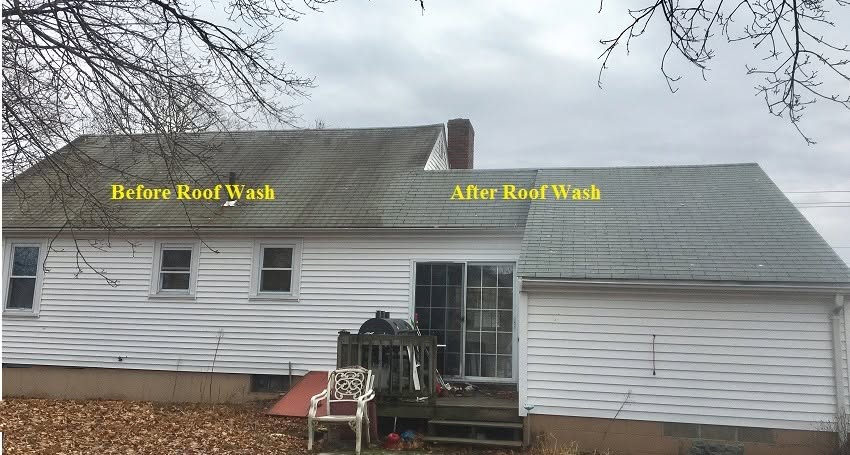
Black roof streaks are commonly associated with algae growth. According to the Asphalt Roofing Manufacturers Association (ARMA), Gloeocapsa magma is one of the most prevalent algae associated with roof discoloration. Its natural dark pigment can make shingles appear brown or black, either uniformly or in streaks.
This problem is particularly relevant in coastal Massachusetts. ARMA notes that algae discoloration is widespread along the Eastern Seaboard and that moisture and humid conditions encourage growth. Cape Cod is entirely within Massachusetts’ officially defined coastal zone, according to the Massachusetts Office of Coastal Zone Management.
Homes with shaded roof sections, nearby trees, or areas where moisture lingers can be especially susceptible. All State Mobile Wash regularly addresses black streaks, moss, algae, and other organic buildup as part of its roof cleaning services, an important service category for homeowners throughout the South Shore and Cape Cod.
Are Black Streaks on a Roof a Sign of Damage?
Black streaks alone do not necessarily mean your asphalt shingles are damaged. ARMA describes algae discoloration itself as primarily an aesthetic issue. However, dark streaks should still prompt a closer look because homeowners may confuse algae with moss, lichen, debris, or other roof conditions.
Moss is more concerning. ARMA reports that moss can affect asphalt shingle performance by causing shingle edges to lift or curl. In severe cases, moss buildup may contribute to lateral water movement and moisture damage to the roof deck.
That distinction matters. If you see black staining along with thick green growth, raised shingles, or patches of moss, having the roof professionally evaluated is a smart maintenance step.
Should You Clean Black Roof Streaks Before Winter?
If your roof is otherwise in good condition and needs cleaning, fall can be a convenient time to address algae and organic growth before winter limits exterior maintenance opportunities.
Winter on the Massachusetts coast can bring snow, ice, rain, wind, and nor’easters. Massachusetts hazard planning identifies east-facing coastal communities including Scituate and Marshfield, along with parts of Cape Cod, as areas that can experience nor’easters particularly strongly. State climate guidance also notes that freeze-thaw cycles involving snow and ice are an important winter roofing consideration.
Cleaning does not prevent winter storms, ice dams, or unrelated roofing problems. It does, however, give homeowners an opportunity to remove unwanted organic staining and see the roof surface more clearly before winter.
Consider scheduling an evaluation before winter when you notice:
- Expanding black streaks across asphalt shingles
- Visible moss or lichen
- Heavy organic buildup in shaded roof areas
- A roof that has not been professionally cleaned in several years
- Staining that makes it difficult to assess the roof’s overall appearance
Can You Pressure Wash Black Streaks Off a Roof?
No. High-pressure washing should not be used to remove algae from asphalt shingles.
ARMA specifically advises against power washers, brushes, and brooms for algae removal because high pressure and aggressive scrubbing can damage asphalt roofing or loosen protective granules. Instead, its guidance calls for an appropriate cleaning solution that is gently applied and rinsed with low-pressure water, with the exact method subject to the shingle manufacturer’s instructions.
This is where soft wash roof cleaning differs from traditional pressure washing. The goal is to treat organic growth without relying on excessive water pressure to blast contamination from the shingles.
All State Mobile Wash uses a no-pressure roof cleaning approach for black streaks and organic buildup, matching the basic principle that delicate roofing surfaces require gentler treatment than durable materials such as concrete.
Why Is Professional Roof Cleaning Safer Than DIY Cleaning?
Roof cleaning combines chemicals, water, height, and slippery surfaces, which can make DIY work hazardous. ARMA encourages homeowners to use trained professionals and warns that cleaning solutions can make a roof extremely slippery. It also recommends consulting the shingle manufacturer’s specific cleaning instructions.
A professional can assess the roofing material, determine whether the discoloration appears to be algae or another type of growth, and choose an appropriate treatment.
At All State Mobile Wash, technicians use professional equipment and soft washing methods designed for delicate exterior surfaces. The company’s roof cleaning service also includes precautions for surrounding landscaping, including pre-wetting vegetation and thoroughly rinsing the property perimeter during and after treatment.
Roof Cleaning Before a New England Winter: What Homeowners Should Know
For South Shore and Cape Cod homeowners, the best reason to deal with black roof streaks before winter is proactive maintenance. You can enter the colder months with a cleaner roof and address visible moss or organic buildup before snow and ice make roof work more difficult.
It is also important to keep expectations realistic. Cleaning algae is not a substitute for roof repair, proper insulation, drainage, or ice-dam prevention. If shingles are missing, curling, leaking, or otherwise damaged, a qualified roofing contractor should inspect the roof.
For a roof that is structurally sound but stained by algae or organic growth, professional roof cleaning can restore a cleaner, more uniform appearance without the risks associated with high-pressure washing.
Frequently Asked Questions About Black Roof Streaks
What causes black streaks on asphalt shingles?
Black or brown streaks are commonly caused by airborne algae, particularly Gloeocapsa magma. ARMA says the discoloration may be mistaken for dirt, fungus, moss, soot, or tree debris.
Will black roof streaks go away on their own?
Homeowners should not assume visible streaking will simply disappear. ARMA notes that algae discoloration can be difficult to remove and may recur even after cleaning, especially where conditions favor algae growth.
Is soft washing safe for asphalt shingles?
An appropriately performed low-pressure cleaning process follows the principle recommended by ARMA: use an approved cleaning solution and gentle application rather than a power washer. Always follow the specific shingle manufacturer’s cleaning instructions.
How often should a roof be professionally cleaned?
There is no single schedule for every property. All State Mobile Wash says a professional roof soft wash can typically keep a roof looking clean for about three to five years, depending on factors such as shade and moisture.
Ready to Remove Black Roof Streaks Before Winter?
Do not blast asphalt shingles with high pressure or wait until snow and ice make exterior maintenance more difficult. If your South Shore or Cape Cod home has black streaks, moss, or other visible roof buildup, All State Mobile Wash can assess the surface and provide professional roof cleaning using a gentle, no-pressure approach. Contact All State Mobile Wash today to request an estimate.